The Musician's Guide to Protecting Your Voice from AI Cloning
AI voice cloning tools can replicate a singer's voice from minutes of audio. Here is what musicians need to understand about their rights, the law, and what protection actually looks like.
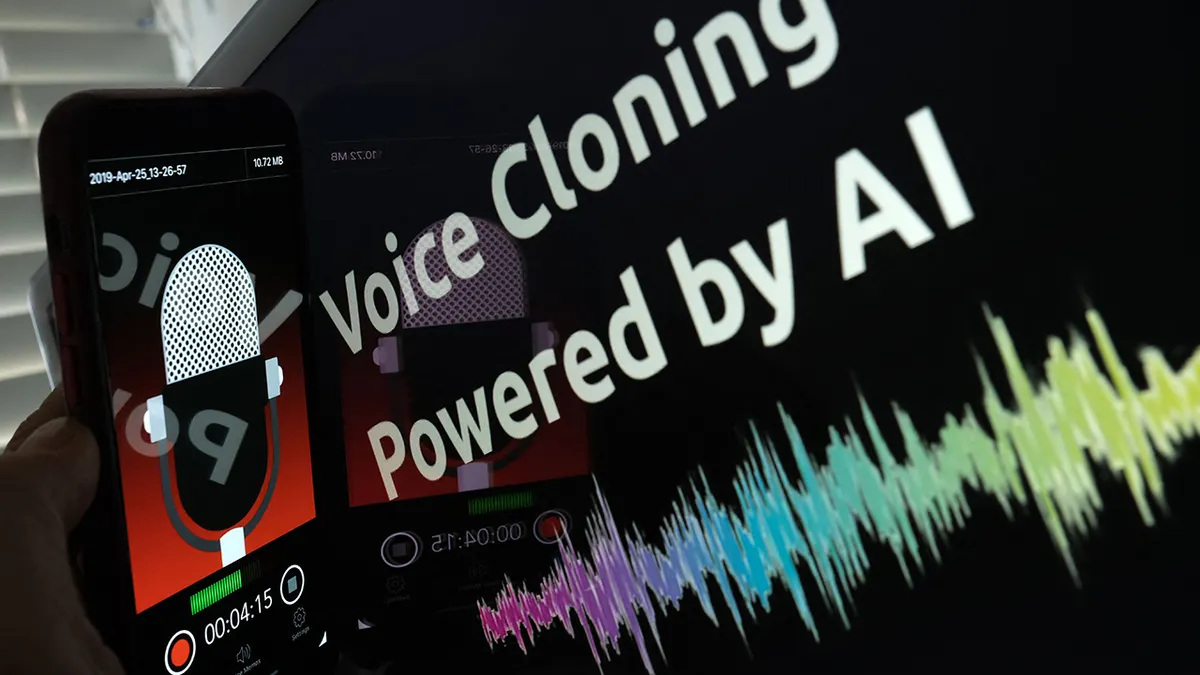
In 2023, a track called "Heart on My Sleeve" went viral. It featured what sounded like Drake and The Weeknd — their voices, their cadence, their production style. Neither artist had anything to do with it. A tool called RVC, trained on their publicly available recordings, had replicated their voices well enough to fool millions of listeners.
The track was pulled. But the tools that made it are still freely available, still being improved, and still running on laptops in bedrooms around the world.
For professional musicians, this isn't a hypothetical threat. It is an active one.
What AI Voice Cloning Actually Does
Modern voice cloning doesn't stitch together existing recordings. It builds a model of your voice — the specific frequencies, the breath patterns, the tonal qualities that make your voice recognizable — and then uses that model to sing or speak anything.
Tools like RVC-Project, so-vits-svc, and commercial services can produce convincing clones from as little as a few minutes of clean audio. That audio can come from anywhere: your released tracks, live recordings posted on YouTube, even podcast appearances.
Once a model of your voice exists, it can be used to record anything — songs, advertisements, statements — without your knowledge or consent.
What the Law Currently Says
Voice is complicated legally because it occupies an awkward space.
In the US, copyright doesn't protect a voice — it protects specific recordings. Your voice as a general instrument isn't copyrightable. However, several other legal frameworks offer partial protection:
Right of publicity. Most US states recognize a right of publicity — the right to control commercial use of your name, likeness, and voice. Using an AI clone of your voice for commercial purposes without consent is likely a violation in most jurisdictions, though enforcement is patchy.
The NO FAKES Act. Proposed federal legislation in the US would create an explicit right against unauthorized AI replicas of a person's voice or likeness. As of early 2026, it has not yet passed, but it has bipartisan support.
The EU AI Act. European regulations now require transparency about AI-generated content, including synthetic voices. Content produced using a cloned voice must be disclosed as such.
Platform policies. Spotify, YouTube, and Apple Music have all updated their policies to require disclosure of AI-generated content and prohibit impersonation of real artists. Enforcement is inconsistent, but takedown mechanisms exist.
The Gap Between Law and Reality
Here is the problem: the law moves slowly, enforcement is difficult, and the tools are already out there.
Even if the NO FAKES Act passes tomorrow, it won't delete the voice models that already exist. It won't stop usage in jurisdictions that haven't passed similar legislation. And it won't help you if you can't identify who made the clone or where it's being distributed.
Legal protection is necessary but not sufficient. The practical question is: what can you do right now?
Protecting Your Voice in Practice
Document your vocal identity. Maintain dated recordings of your voice across different contexts — studio sessions, rehearsals, live performances. This establishes a baseline and a timeline that proves your voice is yours before any clone appeared.
Watermark your audio where possible. Tools like AudioSeal and SynthID embed imperceptible signals into audio that survive compression and re-encoding. Using these on released material creates a technical trail even if the file is later used without permission.
Monitor for clones. Services that scan platforms for audio that matches your vocal signature are becoming more accessible. Catching a clone early — before it accumulates streams or causes reputational damage — is far easier than trying to undo the harm after the fact.
Certify your recordings. A verifiable record that ties your voice, your creative process, and your released work to a specific point in time gives you something that stands up if you ever need to challenge a clone legally. It establishes that your voice existed, was in use, and was documented before the clone appeared.
Get your label or distributor involved. If you're signed or distributed, your label has more leverage with platforms than you do as an individual. Make sure they know this is a priority.
The Longer Game
Voice cloning is not going away. The models will get better, the tools will get cheaper, and the line between a clone and a human performance will get harder to detect.
What will matter increasingly is not whether a voice sounds human — they all will — but whether it can be proven to be human. That proof lives in the process: the dated sessions, the documented recording history, the certified trail of creation that a model cannot fabricate.
Your voice is your most personal instrument. Protecting it in 2026 means thinking like a lawyer and acting like an archivist.
2026-03-14 · 6 min read
What Happens When AI Impersonates You Online — and How to Fight Back
AI-generated content is being posted under real artists' names, passed off as their work, and used to sell products they never endorsed. Here is what your options are.
2026-03-12 · 5 min read
How to Build a Portfolio That Proves Human Creativity
A portfolio used to be a showcase of finished work. In 2026, it needs to do more — it needs to demonstrate that a human made it. Here is how to build one that does both.
2026-03-10 · 5 min read
How to Price Your Human-Made Art in an AI World
AI has compressed prices at the bottom of the creative market. But the market for provably human creative work is developing a premium. Here is how to price into it.
Protect your creative legacy
Don't let your work disappear into the noise. Get a verified human badge that holds up legally and commercially.