How to Build a Portfolio That Proves Human Creativity
A portfolio used to be a showcase of finished work. In 2026, it needs to do more — it needs to demonstrate that a human made it. Here is how to build one that does both.
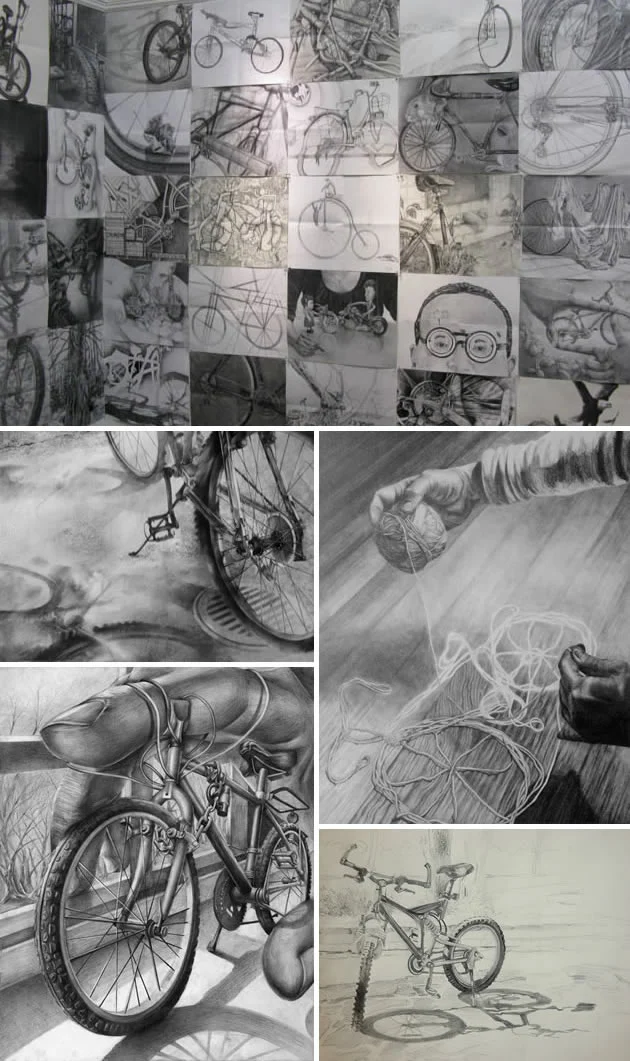
The portfolio has always been a creative professional's most important sales tool. A curated selection of your best work, demonstrating what you can do and what problems you can solve.
For most of creative history, a strong portfolio was sufficient. The work spoke for itself.
In 2026, a strong portfolio still speaks for itself — but it increasingly needs to say something specific: that a human made it. And saying it convincingly requires showing your work in a different way than most portfolios currently do.
Why Finished Work Alone Is No Longer Enough
A portfolio of polished finished pieces proves that you have taste and that you can produce a certain quality of output. It doesn't, by itself, prove that you produced it.
This matters for several reasons:
Potential clients are skeptical. In a market flooded with AI-generated content, sophisticated clients are applying more scrutiny to portfolios. If your work is very polished and very prolific, some will wonder whether a human made all of it.
Platforms require it. Stock platforms, publishing markets, and licensing agencies are increasingly asking for process documentation alongside portfolio submissions. A portfolio without a verifiable process story is incomplete for these audiences.
It differentiates you. A portfolio that shows how you work — the thinking, the iteration, the process — is more compelling than one that just shows outcomes. It gives prospective clients a window into the creative partnership they'd be entering.
What a Process-Inclusive Portfolio Looks Like
Adding process to your portfolio doesn't mean making it a documentation dump. It means selecting and presenting evidence of your creative process in a way that's engaging and reveals your human creative thinking.
Before and after sequences. Show the evolution of a piece — early sketches, intermediate stages, the finished work. This is compelling as a narrative of creative development and it implicitly demonstrates that a human was making decisions at each stage.
Process notes. A paragraph about how a specific piece came together — what the brief was, what you were trying to solve, what decisions you made and why — adds a layer of human creative voice that no AI output can authentically replicate.
Behind-the-scenes documentation. Studio photography, in-progress screenshots, session recordings (even short clips) show the physical and digital reality of your creative process. These are hard to fabricate convincingly.
Client context. For commissioned work, describing the client brief, your response to it, and how the work evolved through collaboration demonstrates a human creative relationship — the back-and-forth, the judgment calls, the craft of working with a client.
The Verification Layer
Process-inclusive presentation is persuasive. Certified process documentation is verifiable.
The difference matters in high-stakes contexts. A potential client who is impressed by your process notes is making a judgment based on what they can see. A potential client who can verify that your process documentation is real — timestamped, third-party verified, tamper-evident — has a different kind of confidence.
For commercial work, licensing, fine art sales, and any context where legal questions might arise, the verifiable layer is what separates a strong portfolio from a defensible one.
A human certification badge linked to your portfolio pieces — one that a client can click to verify — transforms the portfolio from a showcase into a credential.
Practical Steps for Rebuilding Your Portfolio
You don't need to redo everything at once. The approach that works:
Start documenting your current projects. From your next project forward, build the habit of saving process files, noting creative decisions, and timestamping your stages. The documentation you generate now will support the portfolio you'll have in a year.
Select two or three showcase pieces for deep documentation. Choose works from your existing portfolio where you have the best process material — sketches, drafts, correspondence — and build those out as fully documented case studies.
Lead with process in new client conversations. When you're showing your portfolio to a prospective client, walk them through how you work, not just what you've made. The conversation itself demonstrates your human creative thinking.
Get your work certified. For the pieces that matter most — the ones you want to use in high-stakes client conversations or licensing contexts — a formal certification turns your documentation into a credential that travels with the work.
The portfolio that proves human creativity isn't just a better portfolio for 2026. It's a better portfolio, full stop. It tells a richer story, builds a stronger relationship with prospective clients, and positions you in the part of the market that's growing.
2026-03-14 · 6 min read
What Happens When AI Impersonates You Online — and How to Fight Back
AI-generated content is being posted under real artists' names, passed off as their work, and used to sell products they never endorsed. Here is what your options are.
2026-03-10 · 5 min read
How to Price Your Human-Made Art in an AI World
AI has compressed prices at the bottom of the creative market. But the market for provably human creative work is developing a premium. Here is how to price into it.
2026-03-09 · 5 min read
AI and Ghostwriting: Who Actually Owns the Work?
Writers are using AI to ghostwrite books, articles, and scripts at scale. But when AI is the primary author, the copyright question becomes genuinely complicated — for writers and their clients.
Protect your creative legacy
Don't let your work disappear into the noise. Get a verified human badge that holds up legally and commercially.