How to Watermark Your Music Against AI Training
Audio watermarking tools can embed imperceptible signals into your recordings that survive compression and re-encoding. Here is what exists, how it works, and whether it's enough.
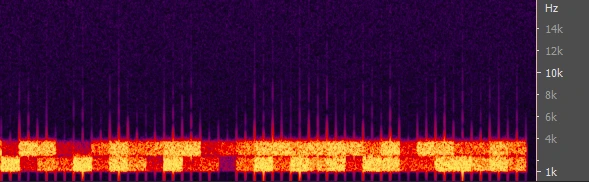
The standard advice for protecting your music — register with your PRO, copyright your recordings, put your name on everything — was built for a world where the primary threat was a human copying your track. That advice still applies. But it doesn't address a newer and more technically sophisticated problem: your recordings being used to train AI models.
Audio watermarking is one of the tools designed specifically for this. Here is an honest assessment of what it can and can't do.
What Audio Watermarking Is
Audio watermarking embeds an imperceptible signal into a recording — inaudible to human listeners, but detectable by the right tools. Unlike visible watermarks on images, audio watermarks are designed to survive common transformations: format conversion, compression, re-encoding, pitch shifting, time stretching, and mixing into other material.
The watermark doesn't prevent your music from being copied or used. What it does is create a detectable trace that can prove the original source of an audio file — including when that file shows up in a training dataset or in an AI-generated output that was based on it.
Tools Currently Available
AudioSeal is an open-source watermarking model developed by Meta AI. It's designed specifically for AI-generated audio detection, embedding watermarks that persist through common audio transformations. It's free to use and available on GitHub.
SynthID Audio, developed by Google DeepMind, works similarly and is integrated into Google's Lyria music generation system. Google has made a version available to third parties, though access is more restricted than AudioSeal.
Beatdapp and similar services offer commercial watermarking aimed at the music industry, primarily for detecting unauthorized distribution of specific recordings rather than AI training specifically.
Digimarc offers enterprise-grade audio watermarking used by major labels and broadcasters, with robust persistence across transformations and a global database for detection.
The Limitations You Should Know
Watermarking is a useful tool, but it's not a complete solution. The limitations matter:
Watermarks can be attacked. Researchers have demonstrated that adversarial techniques can detect and remove watermarks from audio without significant quality loss. Tools designed to strip watermarks exist and are accessible to technically sophisticated actors. A motivated bad actor with the right tools can defeat current watermarking approaches.
Training data is diverse. A model trained on millions of tracks that include your watermarked recordings will have the watermark signal diluted across an enormous dataset. The watermark in the output may be too faint to reliably detect.
Detection requires access to the model. Proving that a specific AI model was trained on your watermarked recordings requires either access to the model's training data or a reliable detection method for the watermark in the model's outputs. Neither is straightforward.
Not all platforms check. Even if your recordings carry detectable watermarks, AI training pipelines don't currently check for them before ingesting data. Watermarking creates evidence — it doesn't create a barrier.
What Watermarking Is Actually Good For
Despite the limitations, watermarking serves real purposes:
Creating a traceable chain of custody. A watermarked recording can be tracked as it moves through distribution. If your music shows up in an unauthorized context, the watermark establishes that the specific file originated with you.
Strengthening legal claims. In a lawsuit or dispute, a watermark that persists in infringing material is concrete evidence of the source. It's harder to dispute than metadata alone.
Signaling intent. Watermarking your releases signals to the market that you take the protection of your recordings seriously. As industry standards develop, this may become a factor in licensing negotiations.
The Combination That Actually Works
Watermarking is one layer of protection. It works best in combination with:
- Copyright registration of your sound recordings and compositions
- Opt-out submissions to major AI training dataset registries
- Process documentation that proves the human creative origin of your recordings
- Certified provenance that establishes your recordings as human-made before they entered any distribution channel
No single tool is sufficient. The combination of these creates overlapping layers of protection — technical, legal, and documentary — that are collectively much harder to circumvent than any one approach alone.
Watermarking is worth doing. Apply it as part of your standard release process. But don't mistake it for a complete solution. The complete solution requires proving human origin as thoroughly and as early in the creative process as possible.
2026-03-14 · 6 min read
What Happens When AI Impersonates You Online — and How to Fight Back
AI-generated content is being posted under real artists' names, passed off as their work, and used to sell products they never endorsed. Here is what your options are.
2026-03-12 · 5 min read
How to Build a Portfolio That Proves Human Creativity
A portfolio used to be a showcase of finished work. In 2026, it needs to do more — it needs to demonstrate that a human made it. Here is how to build one that does both.
2026-03-10 · 5 min read
How to Price Your Human-Made Art in an AI World
AI has compressed prices at the bottom of the creative market. But the market for provably human creative work is developing a premium. Here is how to price into it.
Protect your creative legacy
Don't let your work disappear into the noise. Get a verified human badge that holds up legally and commercially.