Human vs. AI Art: Is There Still a Market for Human Creators?
AI can now produce images, music, and writing at a fraction of the cost of human work. So what is the market actually paying for when it chooses human creativity — and is that market growing or shrinking?
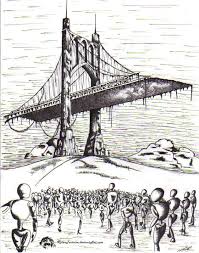
The pessimistic case for human creators goes something like this: AI can produce any visual style on demand, in seconds, for cents. The market for stock illustration, generic graphic design, and commodity creative work is collapsing. Why hire a human when the machine is faster, cheaper, and good enough?
The optimistic counter-case: creativity has always evolved around new tools, human connection and provenance still matter, and the market for genuinely distinctive human work has never been larger.
Both are partially right. The more useful question is: where exactly does human creative work have defensible value in 2026?
Where the Market Has Already Shifted
Some markets have genuinely contracted for human creators. Stock photography and generic illustration were the first to feel it. A business that previously bought a stock image for two hundred dollars can now generate a usable image in thirty seconds. The demand for low-complexity, high-volume visual content has largely moved to AI.
Generic copywriting — product descriptions, basic blog content, templated marketing emails — is following a similar path. The work is being automated at the lower end of the market.
These are real losses for people who built careers there. Pretending otherwise helps nobody.
Where Human Creative Work Retains Clear Value
Fine art and collectibles. The art market's value has always been partially about the object as an artifact of human intention and process — not just the image it contains. A painting's value is tied to the person who made it, their biography, their moment in time. AI can produce images that look like fine art. It cannot produce the thing that makes fine art valuable: an authentic human creative act.
Auction results suggest the premium for documented human origin is growing, not shrinking, as a direct response to AI proliferation.
Bespoke and high-end commercial work. Brands at the premium end of the market — luxury goods, prestige publishing, award-winning advertising — are moving toward more explicit human creative mandates, not fewer. The signal value of "made by a real person" is increasing precisely because it's becoming rarer in commodity markets.
Music with emotional authenticity. Listeners can stream AI-generated ambient music for free. The question is what they pay for when they choose to pay. The evidence suggests they pay for the sense of connection to a specific human who made something with genuine intent. Live performance, artist narrative, and documented creative process are becoming more commercially important, not less.
Culturally specific and contextually nuanced work. AI systems are trained on global averages. Creative work that requires deep cultural knowledge, specific local context, or genuine personal experience is harder to generate convincingly. This favors human creators with specific, authentic perspectives.
Work requiring legal clarity. As discussed, AI-generated content has significant copyright uncertainty. Clients in regulated industries, legal contexts, or anywhere that chain-of-title matters are actively preferring human-made work because it's cleaner to use. This is a practical market advantage that has nothing to do with aesthetic quality.
The Role of Verification
Here is something the optimistic case for human creators often misses: "human-made" as a selling point only works if it's verifiable.
If a client can't distinguish between human-made and AI-generated work — and increasingly they can't — then the premium for human origin depends entirely on trust. And trust, in a market flooded with AI-generated content that sometimes misrepresents its origin, is eroding.
Verification is what transforms human origin from a claim into a credential. A certified human creative process is worth more than an uncertified one because it's auditable. The buyer doesn't have to take your word for it.
This is why the market for verified human work is structurally different from the market for unverified human work. The former has a defensible premium. The latter is increasingly competing on trust alone.
The Market That Is Growing
One market is clearly expanding: the market for creative work where human origin is explicitly documented and provably authentic.
Fine art buyers are asking for process documentation. Music supervisors are asking for chain-of-title clarity. Publishers are requiring authorship declarations. High-value advertising clients are demanding certification.
This is early-stage market infrastructure forming around a new kind of quality signal. The human creative market isn't dying — it's bifurcating. The undifferentiated commodity market is contracting. The verified, provenance-rich market is developing a premium that didn't exist before.
The creators who understand this and position accordingly — building documentation habits, pursuing certification, making their human creative process visible and verifiable — are entering a market that is expanding. The ones competing on price and volume in commodity categories are in a more difficult position.
The question isn't whether there's still a market for human creativity. There clearly is. The question is whether you're building toward the part of that market that rewards being provably human — or hoping that being human is enough on its own.
2026-03-14 · 6 min read
What Happens When AI Impersonates You Online — and How to Fight Back
AI-generated content is being posted under real artists' names, passed off as their work, and used to sell products they never endorsed. Here is what your options are.
2026-03-12 · 5 min read
How to Build a Portfolio That Proves Human Creativity
A portfolio used to be a showcase of finished work. In 2026, it needs to do more — it needs to demonstrate that a human made it. Here is how to build one that does both.
2026-03-10 · 5 min read
How to Price Your Human-Made Art in an AI World
AI has compressed prices at the bottom of the creative market. But the market for provably human creative work is developing a premium. Here is how to price into it.
Protect your creative legacy
Don't let your work disappear into the noise. Get a verified human badge that holds up legally and commercially.