Can AI Legally Copy My Art Style? What Artists Need to Know in 2026
AI image generators are trained on millions of artworks — often without permission. Here is what the law actually says about style imitation, and what you can do to protect yourself.
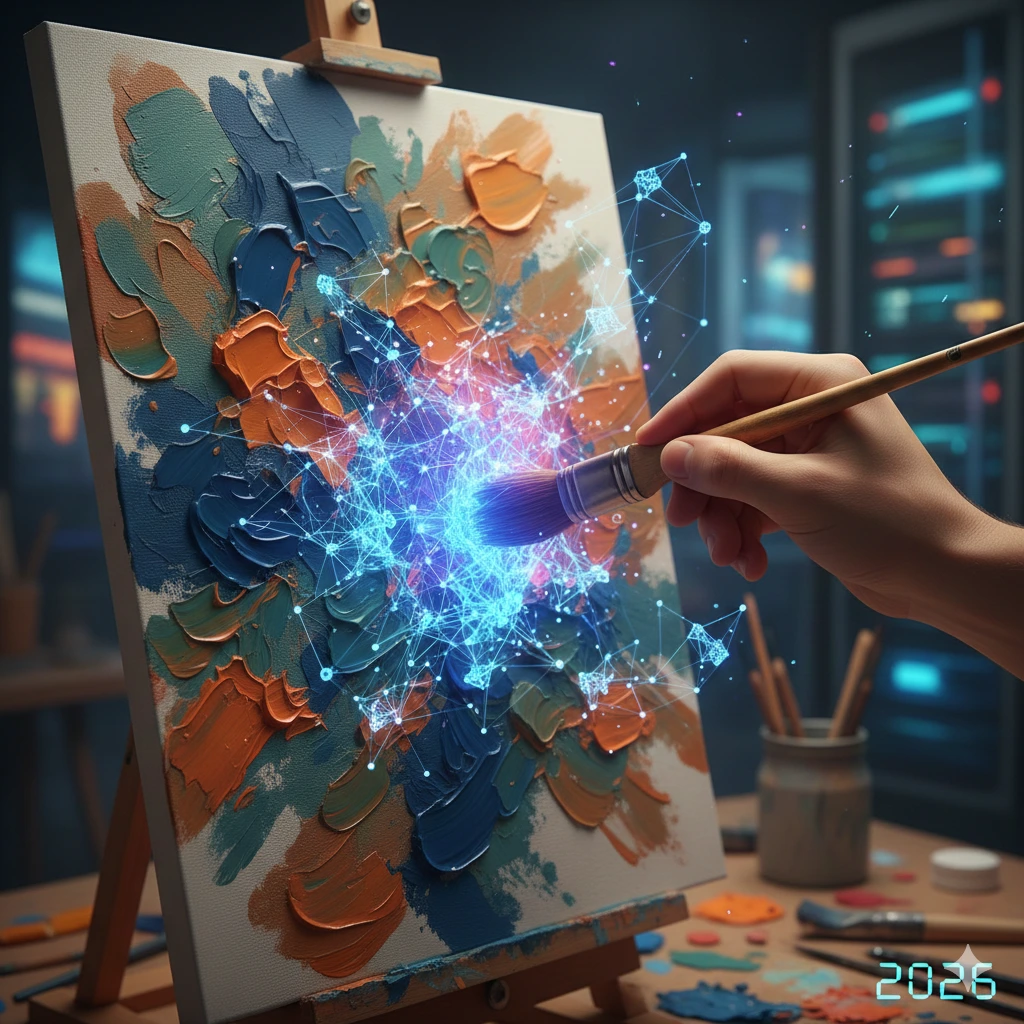
If you have spent any time on social media lately, you have probably seen it: someone types a prompt like "in the style of [your name]" and an AI spits out something that looks unsettlingly close to your work. The linework, the color palette, the compositional choices — all absorbed and reproduced in seconds.
The question every working artist is asking is simple: is this legal?
The honest answer is: it depends, and the law is still catching up.
What Copyright Actually Protects
Copyright protects specific creative expression — a particular painting, illustration, or photograph. It does not protect style, technique, or aesthetic. This has always been the case. An artist who paints like Monet isn't infringing on Monet's estate. A musician who writes songs that sound like Bob Dylan isn't violating copyright.
The distinction matters because AI companies have leaned heavily on it. Their argument is straightforward: training a model on your work is no different from a human artist studying it. The output isn't a copy of any specific piece — it's a synthesis.
Courts are not entirely convinced.
Where the Legal Battles Are Happening
Several major lawsuits are working their way through the US courts right now. Artists including Kelly McKernan, Karla Ortiz, and Sarah Andersen filed suit against Stability AI, Midjourney, and DeviantArt, arguing that training on their work without consent constitutes copyright infringement at scale.
The Getty Images lawsuit against Stability AI in the UK is arguably further along. Getty argues that scraping and reproducing watermarked images crosses a clear line — not just stylistic borrowing, but reproduction of identifiable works.
These cases haven't fully resolved, but they are establishing a framework. The emerging question isn't just whether your style can be copied — it's whether the training process itself requires a license.
The Training Data Problem
Here is what makes the current situation different from a human artist learning from your work: scale and automation.
A model trained on billions of images has effectively industrialized the act of studying art. When that model can reproduce your aesthetic on demand, for commercial purposes, without compensation or credit, the "just learning" argument starts to break down.
The EU AI Act, now in force, requires general-purpose AI models to be transparent about what was used to train them. This creates, for the first time, a legal mechanism for creators to identify whether their work was used — and potentially to opt out or seek compensation.
In the US, the Copyright Office has been holding hearings on AI and creative works since 2023. Formal guidance is expected, but has not yet arrived.
What You Can Do Right Now
The law is slow. The technology is fast. That gap is where artists are getting hurt.
The practical steps available to you today:
- Document your process. Timestamped drafts, sketches, and process recordings establish that a work is yours and that it predates any AI output.
- Register your work. In the US, copyright registration is a prerequisite for suing for statutory damages. It is cheap and the protection is real.
- Use opt-out tools where available. Services like Spawning's Have I Been Trained allow you to check if your work appeared in common training datasets and submit opt-out requests.
- Pursue human certification. A verifiable audit trail of your creative process is increasingly the only form of proof that holds up when your style is contested.
The Harder Truth
Even if the law eventually catches up and grants stronger protections, enforcement will be difficult. Models are trained once and then deployed globally. The work that trained them is already inside the weights.
This is why provenance matters more than detection. Proving that you made something — with a verifiable, timestamped record of how you made it — is the only position that holds regardless of how the legal landscape shifts.
Your style may not be protected. But your proven creative process is. That distinction is going to matter more with every passing year.
2026-03-14 · 6 min read
What Happens When AI Impersonates You Online — and How to Fight Back
AI-generated content is being posted under real artists' names, passed off as their work, and used to sell products they never endorsed. Here is what your options are.
2026-03-12 · 5 min read
How to Build a Portfolio That Proves Human Creativity
A portfolio used to be a showcase of finished work. In 2026, it needs to do more — it needs to demonstrate that a human made it. Here is how to build one that does both.
2026-03-10 · 5 min read
How to Price Your Human-Made Art in an AI World
AI has compressed prices at the bottom of the creative market. But the market for provably human creative work is developing a premium. Here is how to price into it.
Protect your creative legacy
Don't let your work disappear into the noise. Get a verified human badge that holds up legally and commercially.